
Shopping for a small camera in 2026 can mean several different things. Some buyers want a shirt-pocket point-and-shoot. Others want stronger photos, smoother video, or interchangeable lenses without carrying a heavy kit.
Quick answer: Start with the job you need the device to do most often. Choose a pocket zoom for travel flexibility, a larger-sensor fixed-lens model for stills, or a gimbal model for video. Pick a lightweight mirrorless body when lens choice matters, and choose a basic point-and-shoot when price matters most.
| Model | Best fit | U.S. price checked | Main strength | Main tradeoff |
|---|---|---|---|---|
| KODAK PIXPRO FZ55 | Budget snapshots | $159.99 MSRP | 5x optical zoom | 1080p video only |
| DJI Osmo Pocket 3 | Travel video | From $439 | 3-axis gimbal | Video-first design |
| Sony RX100 VII | Travel zoom | $1,499.99 | 24–200mm equivalent lens | Premium price |
| RICOH GR IV | Street and everyday stills | $1,599.95 listed | APS-C sensor in a slim body | Fixed 28mm-equivalent lens |
| FUJIFILM X-M5 | Interchangeable lenses | $799.95 MSRP, body only | 26.1MP APS-C sensor | Lens adds size and cost |
TL;DR
- The smallest body is not always the smallest usable kit.
- Travelers should compare zoom reach, battery needs, and carry comfort together.
- Video creators benefit more from stabilization and audio tools than extra megapixels.
- Large sensors help image quality, but fixed lenses can limit framing.
- U.S. prices and stock change often, so verify the final checkout price before buying.
What “Small” Should Mean Before You Buy
Size should describe the whole setup, not just the body. A thin mirrorless body becomes much larger once you add a long zoom. A fixed-lens model can stay smaller because its lens remains permanently attached.
Pocket size also depends on the pocket you mean. Jacket pockets can hold bodies that will never fit comfortably in jeans. If portability is your priority, compare depth, weight, and lens shape before comparing megapixels.
Techirya already has a broader best compact cameras guide for buyers comparing fixed-lens choices. That guide helps when portability matters more than interchangeable lenses. It also covers rugged and creator-focused models outside this shortlist.
Which Small Camera Type Fits Your Needs?
KODAK PIXPRO FZ55: A Low-Cost Point-and-Shoot
The FZ55 is a simple option for casual snapshots and travel on a tight budget. Kodak lists a 16MP sensor, 5x optical zoom, and 1080p video. Its $159.99 U.S. MSRP stays far below the premium models here.
Pros
- Low purchase price
- 5x optical zoom
- Rechargeable battery
Cons
- Small image sensor
- Video tops out at 1080p
- Fewer advanced controls
This model makes sense when you want a dedicated device without paying for enthusiast features. It gives you optical zoom without depending on digital cropping. Buyers focused on low light or extensive editing should consider a larger-sensor option.
DJI Osmo Pocket 3: The Video-First Choice
The Osmo Pocket 3 uses a 1-inch sensor and a three-axis mechanical gimbal. DJI lists 4K recording up to 120fps in slow-motion mode. The standard package starts at $439 on DJI’s U.S. store.
Pros
- Effective mechanical stabilization
- Rotating touchscreen
- Compact video setup
Cons
- Designed mainly around video
- Fixed lens
- Accessories can raise the total price
This model fits walking videos, travel clips, and vertical social content especially well. Its gimbal can remove the need for a separate stabilizer. Techirya’s best cameras for vlogging guide adds options for creators needing different lenses or formats.
Sony RX100 VII: The Travel Zoom Option
Sony pairs a 24–200mm equivalent zoom with a compact fixed-lens body. U.S. stores list the RX100 VII at $1,499.99. It also supports 4K video and an external microphone input.
Pros
- Broad zoom range
- Built-in electronic viewfinder
- Advanced autofocus features
Cons
- High purchase price
- Smaller sensor than APS-C models
- Compact controls may not suit every hand
Travelers gain the most when one lens must cover many subjects. The zoom handles wide scenes, portraits, and distant details without lens swaps. That flexibility is the strongest reason to accept its premium price.
RICOH GR IV: Larger-Sensor Stills in a Slim Body
The GR IV uses an APS-C sensor with about 25.74 effective megapixels. Its fixed lens provides a 28mm-equivalent view with an F2.8 maximum aperture. Ricoh’s U.S. store listed it at $1,599.95 at the time of this check.
Pros
- APS-C sensor
- Slim fixed-lens design
- Five-axis sensor-shift stabilization
Cons
- Fixed wide-angle lens
- Premium price
- No optical zoom
This option suits street photographers and everyday stills shooters who enjoy a wide view. The fixed focal length keeps the setup simple and thin. Buyers who regularly need telephoto reach should choose a zoom model instead.
FUJIFILM X-M5: A Lightweight Interchangeable-Lens Body
Fujifilm lists the X-M5 at 355 grams with its battery and memory card. It uses a 26.1MP APS-C sensor and accepts X-mount lenses. Its U.S. launch MSRP was $799.95 for the body.
Pros
- APS-C sensor
- Interchangeable lens system
- Strong stills and video feature set
Cons
- Final kit size depends on the lens
- Body price excludes a lens
- Larger lenses reduce portability
The X-M5 makes sense when you expect your photography needs to grow. A compact prime lens can keep the kit light for everyday use. A larger zoom adds reach but removes much of the portability advantage.
How to Compare Features Without Buying Too Much
Start with lens needs before reading long specification sheets. A wide fixed lens suits streets, interiors, and everyday scenes. A zoom works better for trips, family events, wildlife, and distant details.
Next, match sensor size to your expected output. Larger sensors can help in low light and provide more editing flexibility. Smaller sensors remain useful when zoom range, price, or portability matters more.
Video buyers should prioritize stabilization, microphone support, heat management, and screen movement. Stills buyers should focus more on lenses, autofocus, handling, and RAW support. Techirya’s beginner photography tips can improve results before you spend more on equipment.
Small Body Versus Smartphone: When a Dedicated Device Makes Sense
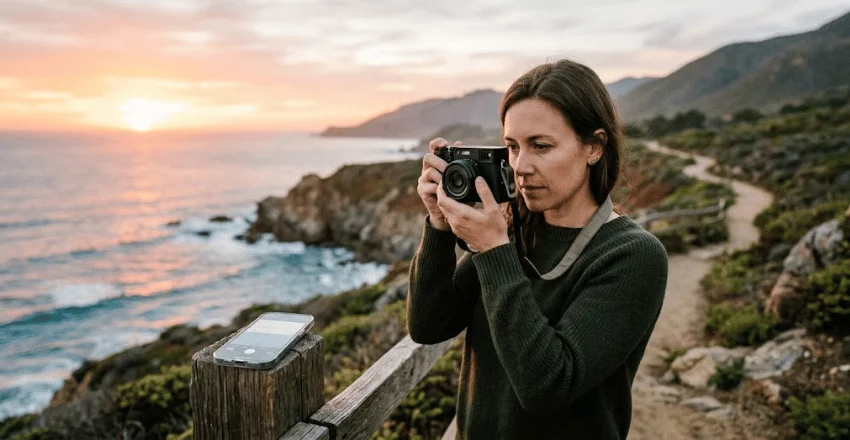
A phone remains easier for instant editing, messaging, and cloud sharing. Dedicated models become useful when you need optical zoom, physical controls, or a larger sensor. They also separate photography from notifications and your phone’s battery demands.
The advantage is not automatic in every situation. A cheap point-and-shoot may not beat a flagship phone in every daylight scene. Buy for a defined benefit such as zoom, handling, stabilization, durability, or lens choice.
Our Verdict for U.S. Buyers
Choose the RX100 VII when travel zoom is your priority, and its price fits your budget. Choose the GR IV when still-image quality and pocketability matter more than zoom. Pick the Osmo Pocket 3 when stabilized video is your main goal.
The X-M5 makes more sense when interchangeable lenses matter more than true pocket size. The FZ55 is the sensible budget route for simple snapshots and optical zoom. None of these choices suits every buyer because portability always requires trade-offs.
Frequently Asked Questions
Is a Small Camera Better Than a Phone?
It can be, but only for the right task. Optical zoom, larger sensors, dedicated controls, and mechanical stabilization can provide clear benefits. Phones still win for instant sharing, quick editing, and everyday convenience.
What Should Beginners Look for First?
Start with a comfortable grip, dependable autofocus, and a lens that suits your subjects. Avoid paying for advanced features you cannot explain yet. A simpler model you use often can teach you more.
How Much Should I Spend?
Set a total budget that includes storage, a spare battery, a case, and any lens. Entry models can cost below $200, while premium compact choices can exceed $1,500. Spend more when a specific feature solves a limitation you already understand.
Are Interchangeable Lenses Worth the Extra Size?
They are useful when your subjects change often, or you want room to grow. A compact prime can keep the total kit manageable. Long zooms and bright lenses can make a small body much heavier.
What Is the Safest Way to Choose Between Two Models?
Compare both models against one normal shooting day instead of a long feature list. Check carry comfort, framing needs, battery demands, and your transfer workflow. When possible, choose a seller with a clear return policy.
Next Step
Write down your most common subject, maximum budget, and the largest kit you will carry. Use those three limits to rule out unsuitable options before reading more reviews. Then confirm current U.S. pricing and stock before ordering.